Skip to content
Sunday, March 8
  • Lifestyle
  • Travel
  • Fashion
  • Submit News
Alive

Alive

Alive

Alive

  • Politics
    • AAP
    • BJP
    • BSP
    • INC
    • Others
  • Entertainment
  • Trending
  • Lifestyle
  • Article
  • Politics
    • AAP
    • BJP
    • BSP
    • INC
    • Others
  • Entertainment
  • Trending
  • Lifestyle
  • Article
Home>>Article>>IPCC Report Highlights How Smart Cities Can Help In Coping With Temperature Change; What India Can Learn From It?
ArticleIndia

IPCC Report Highlights How Smart Cities Can Help In Coping With Temperature Change; What India Can Learn From It?

Pooja YadavApril 13, 20220

The Union budget 2022 had announced the formation of a high-level committee of planners, economists and institutions to create recommendations on urban sector policies.

The minister of finance said that by the time India turns 100, nearly half the population are going to be living in urban areas, making it imperative to not only nurture India’s megacities but also facilitate tier-2 and tier-3 cities to set for the long run.
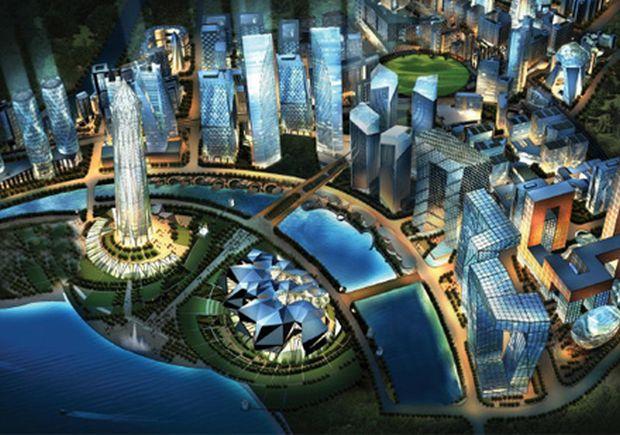
India's 1st smart city is all set to take off in a big way - Rediff.com Business

India is witnessing and observing one of the most important urban growth spurts in history ever. However, three-quarters of the infrastructure that may exist in cities by 2050 is yet to be built.

This presents Indian cities with an unprecedented opportunity to appear in urban planning and development through a long-term strategic lens to enable economic, environmental and social impact.

Urban infrastructure development leads to high economic value-add but often ends up in unequal and inequitable growth. As a developing economy, negative externalities like air and pollution, climate change, flooding, and extreme heat events also strike the amount of urban infrastructure.

Research has shown in detail that if cities are developed as compact and climate-resilient centres, then infrastructure investments can produce more economic gain over time with minimal climate impact whilst ensuring equitable growth.

What lies ahead for the 100 smart cities dream - BusinessToday

Town and country planning acts in India have largely remained unchanged over the past 50 years, hoping on techniques founded by Brits. Cities in fact still create land use and regulatory control-based master plans which, on their own, are ineffective in planning and managing cities.

Despite the various changes that led to modernisation, the main target of coming up with continues to be the strict division of the town into various homogeneous zones like residential, commercial and industrial.

This is often done to forestall the mixing of incompatible uses and to avoid economic and social integration — a relic of the economic age when manufacturing and trade were the first economic activities in cities

set of strategic projects that have the potential to trigger growth within the region, to attain the vision, are identified through a negotiated process. The projects are designed and developed within the context of land that may be made available and capital resources which will be raised.

Indian cities should be used to transition to using master plans for developing a shared vision and stating desired long-term outcomes as a regulatory control tool.

Strategic plans should be developed every five years to extend a city’s competitiveness and help it achieve its strategic goals with relevance to sustainability and economic development by identifying key projects to be implemented.

Report: Smart city tech can save every resident 125 hours a year | ZDNet

Finally, local area plans should be developed to confirm the health, safety and welfare of citizens through public participation, contextualising local challenges, needs and ambitions, while supporting the general objectives of the programme.

Cities should also aim to mainstream the utilization of specialised social, economic and environmental data to make robust links across the urban-rural continuum.

The main components of a smart city [2]. | Download Scientific Diagram

Plans are about people, their perspectives and not just physical spaces. Building consensus around future growth and development, with attention to climate action, and economic and social integration, is crucial. Such a participatory process is what’s going to help build a vibrant, inclusive and liveable urban India.

Related tags : EnvironmentIPCC’s latest reportsmart citiessustainability

Previous Post

Delhi’s 14 Point Summer Plan To Combat Climate Issue And Promote Green Delhi

Next Post

Reasons Leading To Tax Avoidances Amid COVID-19; Check Out

Related Articles

FinanceIndiaInternationalNews

Russia-Ukraine War: Automobiles To Become Expensive For India; Check Out Reasons

BJPIndiaLatest NewsNewsPoliticsTV News

PM Museum Row: “Can’t See Beyond One Family,’ BJP Remarks As Cong Attacks ‘Petty Mindset” Checkout Deets

ArticleEventsFinanceInternationalLatest NewsPoliticsSociety

Internal Clash Of Pakistan: Imran Khan’s Party To Boycott Investigation Of ‘Foreign Conspiracy’ Letter

ArticleCOVID-19IndiaLatest News

Retail Inflation Jumped To All-Time High In Last Eight Years; Read To Know Reasons!

ArticleEducationIndiaNews

SC To Hear Plea Challenging Offline Mode Of Board Exams

Leave a Reply Cancel reply

Your email address will not be published. Required fields are marked *

Recent Posts

  • GERMANY EMERGES WITH FLYING COLOURS IN JUNIOR WC HOCKEY
  • ARGENTIA WORTHY WINNERS IN JR WC HOCKEY
  • Ravinder Indraj Singh: From Bawana To The Cabinet, Championing A Vision Of Empowerment
  • The Heirs from Political Dynasties: Pushpendra Saroj
  • The Heirs from Political Dynasties: Yugvendra Pawar
  • Heirs from famous Political Dynasties: Shreejaya Ashok Chavan
  • Heirs from Political Dynasties: Amol Haribhau Jawale
  • A TRIBUTE TO ZUBEEN GARG
  • Heirs from Political Dynasties: Sulabha Gaikwad
  • Heirs from political dynasties: Kalpana Murmu Soren
  • GERMANY EMERGES WITH FLYING COLOURS IN JUNIOR WC HOCKEY
  • ARGENTIA WORTHY WINNERS IN JR WC HOCKEY
  • Ravinder Indraj Singh: From Bawana To The Cabinet, Championing A Vision Of Empowerment
  • The Heirs from Political Dynasties: Pushpendra Saroj
  • The Heirs from Political Dynasties: Yugvendra Pawar

Popular Posts

GERMANY EMERGES WITH FLYING COLOURS IN JUNIOR WC HOCKEY

Our CorrespondentFebruary 12, 2026

ARGENTIA WORTHY WINNERS IN JR WC HOCKEY

Our CorrespondentFebruary 12, 2026

Recent Posts

  • GERMANY EMERGES WITH FLYING COLOURS IN JUNIOR WC HOCKEY
  • ARGENTIA WORTHY WINNERS IN JR WC HOCKEY
  • Ravinder Indraj Singh: From Bawana To The Cabinet, Championing A Vision Of Empowerment
  • Recent

  • Popular

  • Comments

  • GERMANY EMERGES WITH FLYING COLOURS IN JUNIOR WC HOCKEY

    Our CorrespondentFebruary 12, 2026
  • ARGENTIA WORTHY WINNERS IN JR WC HOCKEY

    Our CorrespondentFebruary 12, 2026
  • Ravinder Indraj Singh

    Ravinder Indraj Singh: From Bawana To The Cabinet, Championing A Vision Of Empowerment

    Our CorrespondentJanuary 7, 2026
  • The Heirs from Political Dynasties: Pushpendra Saroj

    Samriti DhatwaliaOctober 27, 2025
  • The Heirs from Political Dynasties: Pushpendra Saroj

    Samriti DhatwaliaOctober 27, 2025
  • Centre-Farmer Talks Today; Govt to Not Budge on Rollback of Laws

    adminJanuary 8, 2021
  • Indian firm Bharat Biotech Will Be Commencing Phase I Trials Of Intranasal Covid-19 Vaccine Candidate Next Month

    adminJanuary 8, 2021
  • Namyaa Launched Latest Range Of Menstrual Healthcare Products ‘Namyaa Life Science

    adminJanuary 8, 2021

Contact Details

Jhandewalan, New Delhi, India
+91 9810160122
[email protected]
All Rights Reserved | WordPress Theme Ultra Seven
  • Home
  • Terms & Conditions
  • Privacy Policy
  • Support
  • Copyright Policy