
There was a time when people respected positions of authority and understood the importance of showing restraint before detaining someone. A recent incident has once again put the Delhi Police under scrutiny. This is not about taking sides; it is about knowing how to react, when to intervene and when to take action. The police should understand the difference. Journalists are expected to stand close to the action, ask questions and report what they see. But during recent protests in Delhi, some journalists alleged that they themselves became targets of police action while doing their jobs.
From reporters repeatedly showing their press cards to a woman journalist alleging that police officers lifted her shirt, the incidents have raised serious questions about press freedom, police conduct and the safety of journalists covering protests.
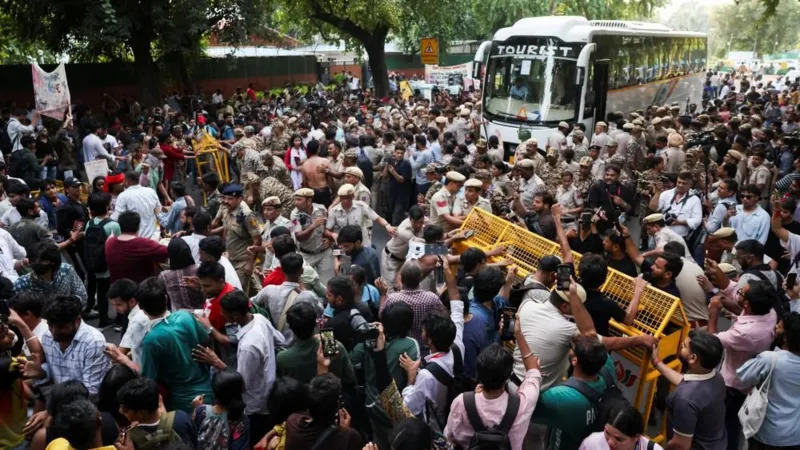
Protesters held the demonstrations against Chief Election Commissioner Gyanesh Kumar, demanding his resignation amid allegations of irregularities in the Special Intensive Revision (SIR) exercise. Several political leaders, activists, students and journalists were present during the demonstrations.
“See My Press Card”: Journalists Detained
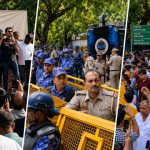
On October 2, several journalists covering the protest at Jantar Mantar alleged that they were pushed, manhandled and taken towards detention buses despite repeatedly identifying themselves as members of the media. Videos from the protest showed journalists holding up their press or identity cards and asking police personnel to allow them to continue reporting. Independent and digital journalists were among those affected.
स्वतंत्र पत्रकार हर्ष को पुलिस ले जाती हुई , लेकिन अचानक बड़ा ट्विस्ट आ गया , हर्ष ने अपना प्रेस का आईडी निकाल कर पुलिस को दिखाया लेकिन फिर भी नहीं छोड़ा ,
बड़ी मुश्किल से सभी पत्रकारो के विरोध करने के बाद हर्ष को पुलिस ने छोड़ा , https://t.co/7NVGoK2w8T
— Nargis Bano (@Nargis_Bano78) October 2, 2026
Journalist Harsh Yadav was reportedly pushed towards a bus even as he repeatedly told police officers that he had his press card. Another digital journalist, Mohd Ayan, also showed his press card but was reportedly asked whether he had a Press Information Bureau card before being pushed inside a bus. Maktoob journalists Fida Fathima and Jibraan Uddin were also reportedly manhandled while covering the protest. Journalist Rajiv Talwar was among those pushed into a detention bus. This raises an important question: Does a journalist need a particular government-issued card to be allowed to report from a public protest?
A Woman Journalist’s Disturbing Account
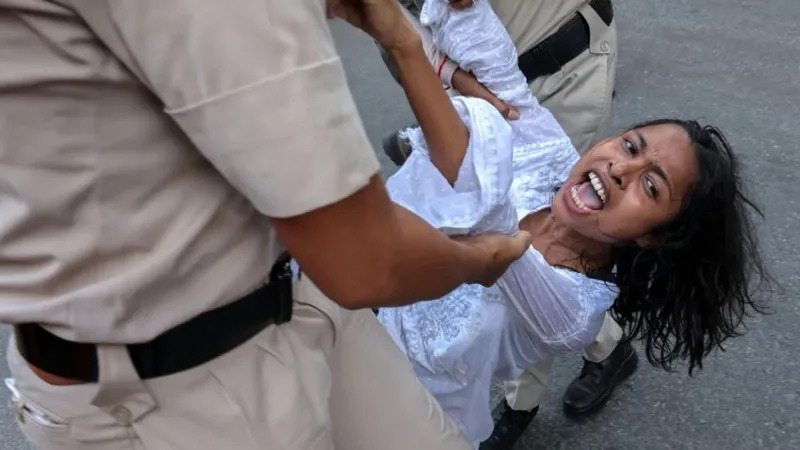
The situation became even more disturbing when independent journalist Deeksha Sinha shared her experience while covering the protests on October 4. According to her account, police officers attempted to detain her even after she identified herself as a journalist. She said she showed her camera and told the officers that she was from the media, but they continued to drag her without listening to her.
View this post on Instagram
Sinha alleged that some police officers lifted her shirt while she was being detained. She also alleged that a male officer mocked her during the incident. She was eventually allowed to leave the detention bus. Later, while covering another part of the protest, Sinha said a woman police officer tried to snatch her camera. During the incident, her microphone was ripped from the camera and she was pushed into a bus.
“They Lifted Me Up” stated Deeksha Sinha
Deeksha Sinha stated that inside the bus, she saw several women being manhandled. She said she eventually felt dizzy and realised that she had lost her phone, glasses and one shoe. She further alleged that female police officers physically lifted her and that one officer tried to unbutton her trousers. These are serious allegations and require proper investigation.
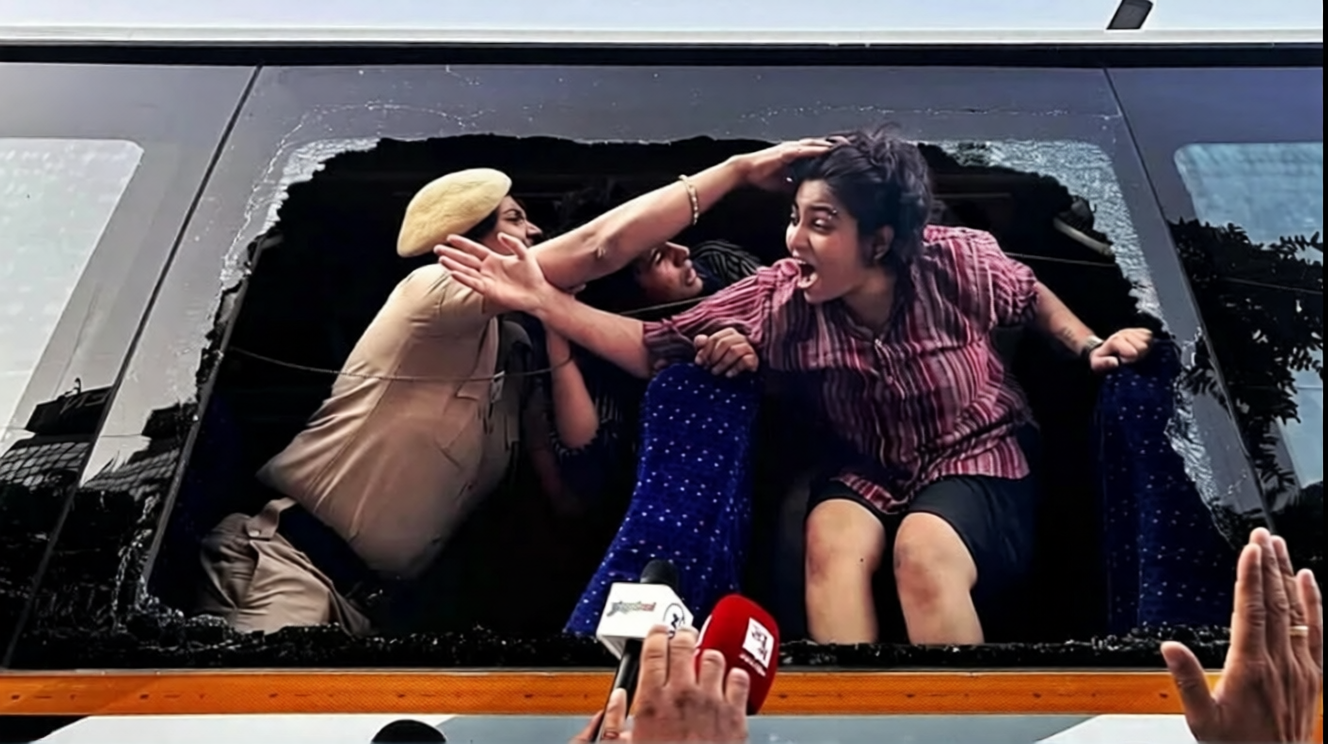
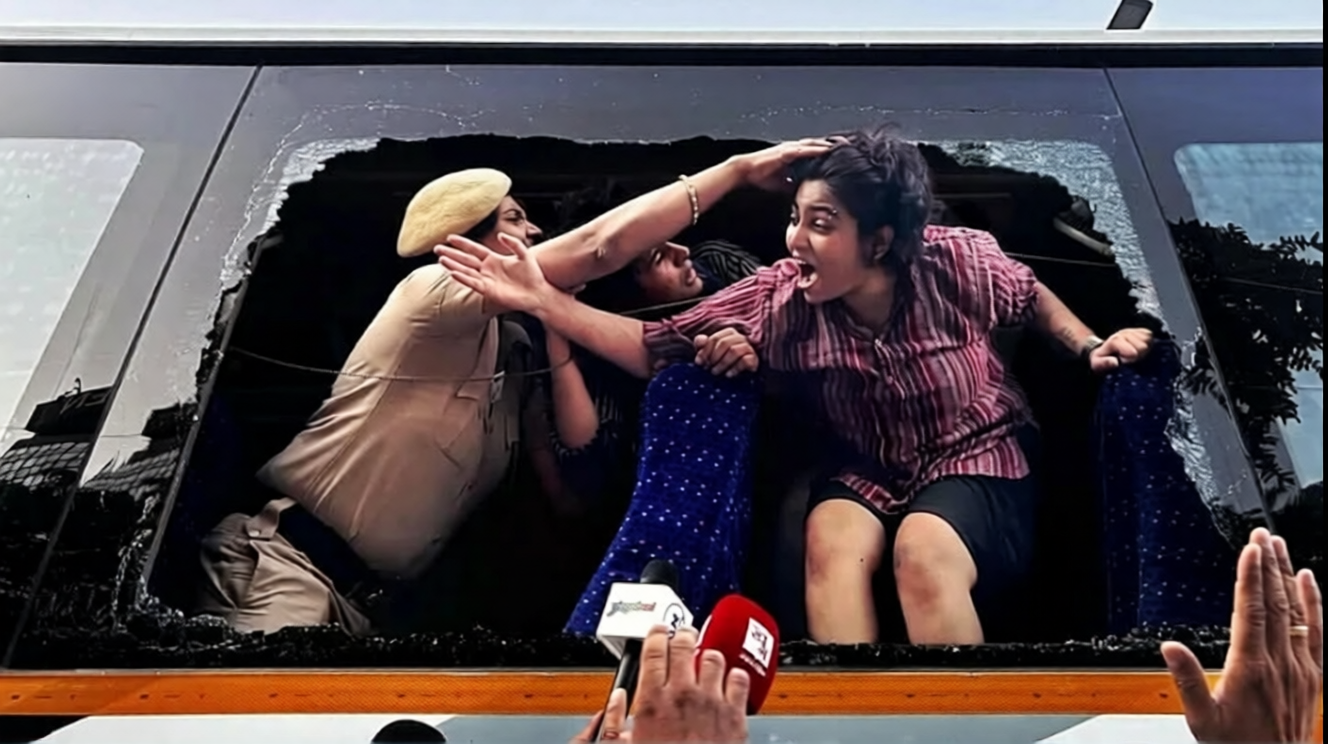
प्रदर्शन के दौरान हिरासत में ली गई एक महिला प्रदर्शनकारी ने बस से इस तरह निकलने की कोशिश की। हालांकि बाद में वह सुरक्षित अंदर चली गईं। ली मेरीडियन के पास वाले चौराहे पर प्रदर्शन जारी है। प्रदर्शनकारी हिरासत में बसों में लिए गए लोगों को छोड़ने की मांग कर रहे हैं।
#JantarMantar https://t.co/vzQDTmReAA
— Hemant Rajaura (@hemantrajora_) October 4, 2026
Sinha also said that other protesters informed the police that she was experiencing a medical emergency. She was eventually given water. According to her account, protesters later broke a bus window from outside, while those inside pushed the bus doors open and escaped. Sinha suffered bruises during the incidents.
More Than One Journalist, More Than One Complaint
The protests witnessed heavy police deployment and barricading. Several political leaders and activists, including AAP MP Sanjay Singh, RJD leader Manoj Jha and CPI(M) leader Brinda Karat, were detained. There were also allegations involving the treatment of a woman journalist by police officer ACP Vivek Bhagat. Activists and others demanded an FIR over allegations of shoving and sexual assault. The allegations remain subject to investigation.
Why Press Freedom Matters
A journalist covering a protest is not the same as a protester. Their responsibility is to report events, record people’s voices and show what is happening on the ground. This distinction becomes especially important during tense demonstrations. Journalists may stand near barricades, police vehicles or protesting crowds because that is where the news is unfolding. However, their presence should not automatically make them targets of force or detention. The reported incidents also raise concerns about the safety of independent journalists, who may not have the same institutional support as those working for large media organisations.
According to Reporters Without Borders’ 2026 World Press Freedom Index, India ranked 157th among 180 countries. In this wider context, allegations of journalists being stopped or manhandled while reporting require serious attention.
The Question That Remains
A press card should not be a shield that a journalist has to repeatedly hold up while asking not to be dragged away. A camera should not become a reason to treat a reporter as a protester. At the same time, journalists covering demonstrations must follow lawful police instructions and maintain professional distance from confrontations. But allegations of unnecessary force, physical assault or inappropriate treatment—especially involving women journalists—must be examined independently and fairly. The Delhi protests have therefore left behind a question larger than one demonstration: When journalists are stopped from documenting events, who remains to document what happened?
Press freedom is not only about the right to publish a story. It is also about the ability to gather that story safely, independently and without fear to serve the audience.